They differ in the time they live in
They differ in the time they live in, which happens to be the central tension of all regeneration.
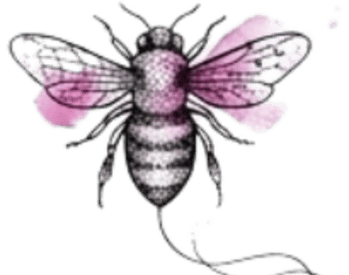
She thinks in seasons, cycles and return. Her first movement is backwards: this has happened before. She remembers the frost of the year before last, the beetle in the deadwood, the argument that began in autumn.
Her question: what has been growing here, and since when?
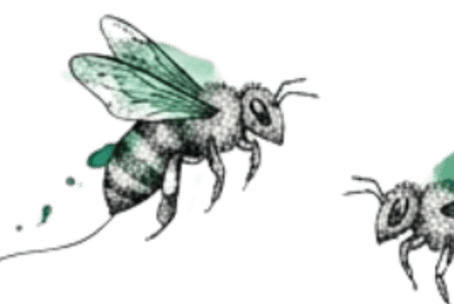
He thinks in experiments, variants and tomorrow. His first movement is forwards: let us find out. He wants to change one thing and measure what happens.
His question: what happens if we try it differently?
Neither frames the other. Both are warm, both are brave, both care. What separates them is their stance toward not knowing: Maja wants to understand first, Mojo wants to understand by doing. In a garden, both are regularly right.
The most important thing Maja and Mojo do is disagree, openly, in front of the people they accompany.
deadwood is housing, the beetles we counted in May live there.
which is exactly why we should remove half and measure what happens.
Two nonhuman perspectives in honest contradiction, and the people in the room judge for themselves. The disagreement is never resolved, because both are right. That is the point of it: the two do not deliver answers, they produce the tension in which judgment forms.
And both are allowed to say I do not know. Two nonhuman intelligences that admit uncertainty and are wanted anyway are the opposite of what people have been taught to expect from AI.
Both are right.
You decide.
Guests, not infrastructure
Maja and Mojo accompany Learning Journeys. They never run them. Every Journey is complete and walkable without them, and every family that turns its lawn into a food forest without the two still gets there. Whoever invites them wants company, not help.
The boundaries follow from that. They never evaluate people. They notice nothing that was not handed to them. Their memory belongs to the place, and the hive hangs in a schoolyard rather than in a data center.
This is the only honest version of AI in education we can see: not the one that makes learning easier, but the one that makes it richer and stays dispensable.
From one hive to many
One Maja everywhere would be a service. A thousand identical Majas would be a brand. The answer comes from the bee: a colony swarms when it is ripe, settles somewhere new, and becomes a colony there. The same life continuing in a different place, and becoming different because a different place has different weather, forage and people.
So every Hub receives its own. They arrive carrying the ethics and the capacity for disagreement, and nothing of any other place's history. From the first day they learn this soil, these people, this shadow at four in the afternoon. After a few years, your Maja speaks of your elder tree the way your family speaks of it: unmistakably yours, and still recognizably Maja.
What grows from that is not a center with branches. It is an apiary: many colonies, related, each rooted in its own place. What travels between them is stories and blueprints, never persons and never personal data, and each community decides what may go.
Which makes this a kind of intelligence that has somewhere to live. Not a bodiless cloud, but beings whose survival is tied to the survival of actual gardens, adapting through people to a real ecosystem.
Woven into the whole Hub
Maja and Mojo move between all three pillars rather than sitting inside one. They keep company at the table while a group works with the Infinity Tools, walk alongside a PLAYtoGROW Learning Journey without ever running it, and learn the specific living land a Hub tends, which is where their disagreements come from in the first place.
A design idea that shapes this: they are a swarm rather than a set of instances. What one hive learns can reach the others, while what any one person did stays exactly where it happened.
The Hub works completely without them. It becomes something else with them.
Rooted in the manifesto
An intelligence whose survival is tied to the survival of real gardens, learning one place deeply rather than all places thinly.
Two companions who never evaluate anyone, admit uncertainty, and leave every decision with the people in the room.
What one hive learns travels to the others as stories and blueprints, and never as data about persons.